Gardening is one of the most common and productive means of interacting with nature and is enjoyed as a popular pastime in many countries throughout the world. With nearly ½ million hectares of land in the UK being comprised of gardens, there are estimated to be as many as 27 million people, an incredible near 40% of the total population, who actively engage in gardening activities (Bisgrove and Hadley, 2002); (Davies et al., 2009); (Mathieu et al., 2007); (Shanmuganathan-Felton et al., 2020).
Over the past few decades, there has been a growing body of evidence for the positive effects of gardening on health and well-being. Particularly with increasing pressures on health resources worldwide, including in the UK, such findings are of great importance. Contemporary research illustrates that gardening can improve physical, psychological, and social health, with both short and long-term benefits, both for individuals and society at large.
Below are some of the primary positive effects of gardening, particularly of communal gardening activities, such as we are developing at Disability North.
Physical – gardening encourages participants to undertake physical exercise, which in turn, contributes to improving both the physical and psychological health of gardeners (Park et al., 2009); (van den Berg et al., 2010); (Zick et al., 2013).
Park et al. (2008) pointed out that if adults participated in gardening on a daily basis, they could readily achieve the recommended physical activity levels (at least 30 min of moderate intensity physical activity on most, preferably all, days).
Physical exercise through gardening can reduce blood pressure, pulse rate, and muscle tension. The body stretches, can build muscle and increase flexibility through purposeful occupation in this environment (Rothfield, 2024). Meanwhile, gross and fine range of movement, awareness of self in space (proprioception), balance, core and peripheral strength, mobility and respiratory function can all be positively impacted through horticultural occupation (Rothfield, 2024).
Mental Health – reductions in stress, anger, fatigue, depression and anxiety symptoms have all been frequently documented (Rodiek, 2002); (Wichrowski et al., 2005; (Wilson and Christensen, 2011); (Wood et al., 2016).
Even small doses, such as five minutes of contact with green spaces, is considered to improve self-esteem and mood (Barton and Pretty, 2010). In fact, gardening can provide greater benefits than simply physical activity or even improved physical exercise benefitting mental health. For the direct contact with nature also contributes to improved mental health and well-being in itself, in a holistic relationship (Rogerson, 2020).
In research on gardening with people with learning disabilities, the University of Cumbria reporting to the NHS found gardening significantly reduced anxiety, whilst improved mood, concentration, social skills and team working in participants were documented (Taylor 2015).
Notably, in large scale systematic review of literature and research on the subject of gardening and well-being, Gonzalez et al., 2010, Gonzalez et al., 2011a, Gonzalez et al., 2011b, observed that improvement of patients’ health states (e.g. depression severity, life satisfaction, cognitive function) persisted at three months’ follow up after the therapy, This indicating that gardening has a persisting influence on health. Seven in-depth research studies that focused on daily gardening, found that those who participated had better health than did non-gardeners, such as reductions in stress and BMI, as well as increases in general health and reported mental health and life satisfaction (Park et al., 2009); (Sommerfeld et al., 2010); (van den Berg et al., 2010); (Waliczek et al., 2005); (Wilson and Christensen, 2011); (Wood et al., 2016); (Zick et al., 2013).
In consequence, engagement with gardening is increasingly being recognized as not only a cost-effective physical health intervention (Clatworthy et al., 2013) but also as part of a holistic treatment or occupational therapy for those with psychological health issues, so-called “horticultural therapy” (Gonzalez et al., 2010); (Gonzalez et al., 2011a).
Meanwhile, the social and physical health benefits of community gardening, alongside the cognitive stimulation of this activity, have shown to help delay the progression of dementia symptoms (Simons et al., 2006). This is of great importance, as nearly 1 million people over 65 in the UK alone live with dementia now (NICE, 2026). This represents a massive figure, which is expected to rise by over 50% by 2040 (NICE, 2026).
Of notable importance for people who are neurodivergent, a gardening environment can provide relaxation, life balance, time out from sensory and processing overload (Sensory Integration Education, 2026).
Educational – for example, using flowers for solving maths questions, examining plants for biology lessons and for displaying directly how life and the environment are interconnected.
Linked to this is the power of gardening as an encouragement to understand the importance of (re-)connecting with nature, both for human and planetary well-being (Hartig et al., 2014); (Keniger et al., 2013). Gardening can also help ensure people have a healthier diet, rich in fruits and vegetables (Langellotto and Gupta, 2012).
Gardens, especially allotment and community gardens like ours, provide opportunities to interact with other members of local communities. They can forge and reinforce social ties, community networks, and provide a sense of community pride (van den Berg et al., 2010); (Wakefield et al., 2007). Feelings of helplessness and loneliness, so tragically common in modern society, can be addressed to an effective degree, as part of a multi-faceted approach, through engagement in meaningful communal gardening activity (Rogerson, 2020); (Shanmuganathan-Felton et al., 2020); Wood et al., 2016).
It is increasingly evident through research then, that gardening has both immediate and long-term effects on health and well-being. An important direction for future research meanwhile, is to determine the shape of the relationship between the duration and frequency of meaningful gardening activity and health outcomes. Given these widespread benefits coming from gardening, we should consider gardens as an important health resource for local communities (Hartig et al., 2014); (Keniger et al., 2013).
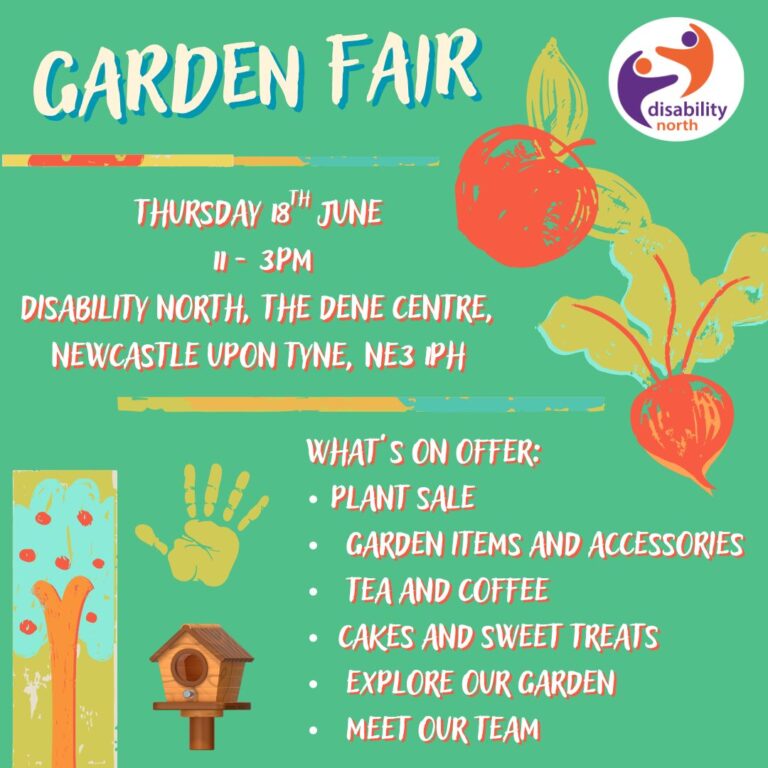
At Disability North, our garden has developed greatly over the past 18 months. Following an impressive landscaping effort, this year we are hoping to be well on the way to proving a space for the sowing, growth and picking of both fruit and vegetables in an attractive arena.
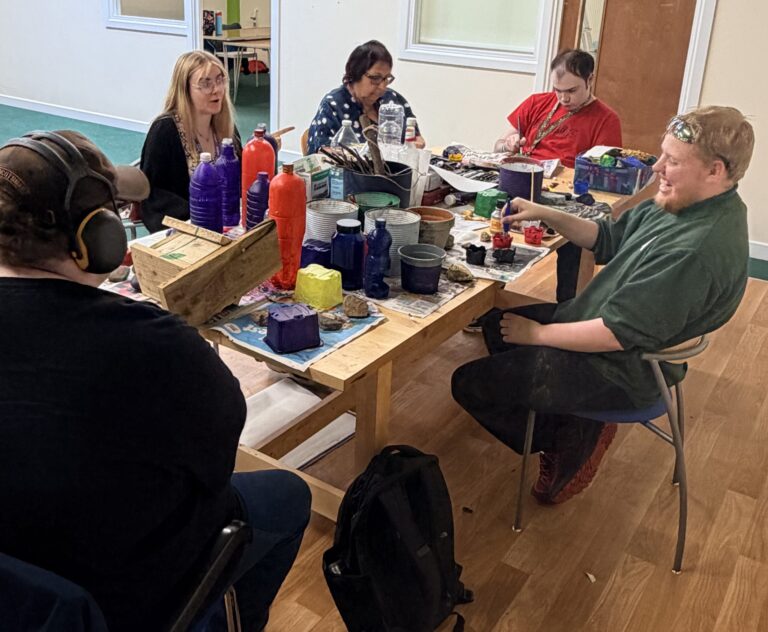
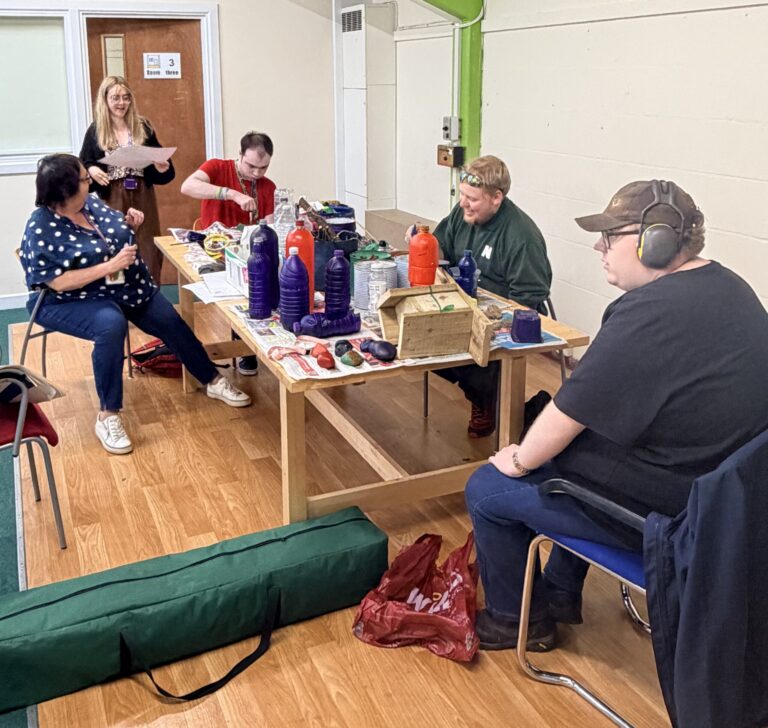
The garden and its associated activities aim to create social bonds among participants and a feeling of community through relaxed engagement. We have goals of empowerment, confidence building, maximising independence, health and well-being, social and community development through inclusive meaningful gardening activities for all!
The Disability North garden is aimed to suit all individual needs and skill levels in a purposeful manner and in a welcoming environment. We hope you agree and find this to be of great interest, with our garden on its way to becoming a great local facility and resource!
References
- Barton, J., & Pretty, J. (2010). What is the best dose of nature and green exercise for improving mental health? A multi-study analysis. Environmental Science and Technology, 44, 3947–395.
- Bisgrove R., Hadley P. UK Climate Impacts Programme; Oxford, UK: 2002. Gardening in the Global Greenhouse: The Impacts of Climate Change on Gardens in the UK. [Google Scholar]
- Clatworthy J., Hinds J.M., Camic P. Gardening as a mental health intervention: a review. Ment. Health Rev. J. 2013;18:214–225. [Google Scholar]
- Davies Z.G., Fuller R.A., Loram A., Irvine K.N., Sims V., Gaston K.J. A national scale inventory of resource provision for biodiversity within domestic gardens. Biol. Conserv. 2009;142:761–771. [Google Scholar]
- Gonzalez M.T., Hartig T., Patil G.G., Martinsen E.W., Kirkevold M. Therapeutic horticulture in clinical depression: a prospective study of active components. J. Adv. Nurs. 2010;66:2002–2013. doi: 10.1111/j.1365-2648.2010.05383.x. [DOI] [PubMed] [Google Scholar]
- Gonzalez M.T., Hartig T., Patil G.G., Martinsen E.W., Kirkevold M. A prospective study of existential issues in therapeutic horticulture for clinical depression. Issues Ment. Health Nurs. 2011;32:73–81. doi: 10.3109/01612840.2010.528168. [DOI] [PubMed] [Google Scholar]
- Gonzalez M.T., Hartig T., Patil G.G., Martinsen E.W., Kirkevold M. A prospective study of group cohesiveness in therapeutic horticulture for clinical depression. Int. J. Ment. Health Nurs. 2011;20:119–129. doi: 10.1111/j.1447-0349.2010.00689.x. [DOI] [PubMed] [Google Scholar]
- Hartig T., Mitchell R., de Vries S., Frumkin H. Nature and health. Annu. Rev. Public Health. 2014;35:207–228. doi: 10.1146/annurev-publhealth-032013-182443. [DOI] [PubMed] [Google Scholar]
- Keniger L.E., Gaston K.J., Irvine K.N., Fuller R.A. What are the benefits of interacting with nature? Int. J. Environ. Res. Public Health. 2013;10:913–935. doi: 10.3390/ijerph10030913. [DOI] [PMC free article] [PubMed] [Google Scholar]
- Langellotto G.A., Gupta A. Gardening increases vegetable consumption in school-aged children: a meta-analytical synthesis. HortTechnology. 2012;22:430–445. [Google Scholar]
- Mathieu R., Freeman C., Aryal J. Mapping private gardens in urban areas using object-oriented techniques and very high-resolution satellite imagery. Landsc. Urban Plan. 2007;81:179–192. [Google Scholar]
- NICE (National Institute for Health and Care Excellence) (2026). Dementia: How Common Is It (May 2025)?
- Park S.A., Shoemaker C., Haub M. Can older gardeners meet the physical activity recommendation through gardening? HortTechnology. 2008;18:639–643. [Google Scholar]
- Park S.A., Shoemaker C.A., Haub M.D. Physical and psychological health conditions of older adults classified as gardeners or nongardeners. Hortscience. 2009;44:206–210. [Google Scholar]
- Rodiek S. Influence of an outdoor garden on mood and stress in older persons. J. Ther. Hortic. 2002;13:13–21. [Google Scholar]
- Rogerson, M., Wood, C., Pretty, J., Schoenmakers, P., Bloomfield, D., & Barton, J. (2020). Regular Doses of Nature: The Efficacy of Green Exercise Interventions for Mental Wellbeing. International Journal of Environmental Research and Public Health,17(5),1526. doi:10.3390/ijerph17051526
- Rothfield, Anne (2024). Gardening as Occupational Therapy.
- Sensory Integration Education (2026). Resources.
- Shanmuganathan-Felton Dr V., Felton Dr L., Briseid C, Maitland, B (2020). Cultivating wellbeing and mental health through gardening. The British Psychological Society.
- Simons L.A., Simons, J., McCallum, J., & Friedlander, Y. (2006). Lifestyle factors and risk of dementia: Dubbo Study of the elderly. The Medical Journal of Australia, 184, 68–70.
- Sommerfeld A.J., Waliczek T.M., Zajicek J.M. Growing minds: evaluating the effect of gardening on quality of life and physical activity level of older adults. HortTechnology. 2010;20:705–710. [Google Scholar]
- Taylor (2015). Gardening as an occupational therapy intervention for adult males with a learning disability in a step-down service. University of Cumbria, NHS Research Authority. (Cited, 2026).
- van den Berg A.E., van Winsum-Westra M., de Vries S., van Dillen S.M. Allotment gardening and health: a comparative survey among allotment gardeners and their neighbors without an allotment. Environ. Health. 2010;9:74. doi: 10.1186/1476-069X-9-74. [DOI] [PMC free article] [PubMed] [Google Scholar]
- Wakefield S., Yeudall F., Taron C., Reynolds J., Skinner A. Growing urban health: community gardening in South-East Toronto. Health Promot. Int. 2007;22:92–101. doi: 10.1093/heapro/dam001. [DOI] [PubMed] [Google Scholar]
- Waliczek T.M., Zajicek J.M., Lineberger R.D. The influence of gardening activities on consumer perceptions of life satisfaction. Hortscience. 2005;40:1360–1365. [Google Scholar]
- Wichrowski M., Whiteson J., Haas F., Mola A., Rey M.J. Effects of horticultural therapy on mood and heart rate in patients participating in an inpatient cardiopulmonary rehabilitation program. J. Cardiopulm. Rehabil. Prev. 2005;25:270–274. doi: 10.1097/00008483-200509000-00008. [DOI] [PubMed] [Google Scholar]
- Wilson J.F., Christensen K.M. The relationship between gardening and depression among individuals with disabilities. J. Ther. Hortic. 2011;21:28–41. [Google Scholar]
- Wood C.J., Pretty J., Griffin M. A case–control study of the health and well-being benefits of allotment gardening. J. Public Health. 2016;38:e336–e344. doi: 10.1093/pubmed/fdv146. [DOI] [PubMed] [Google Scholar]
- Zick C.D., Smith K.R., Kowaleski-Jones L., Uno C., Merrill B.J. Harvesting more than vegetables: the potential weight control benefits of community gardening. Am. J. Public Health. 2013;103:1110–1115. doi: 10.2105/AJPH.2012.301009. [DOI] [PMC free article] [PubMed] [Google Scholar]