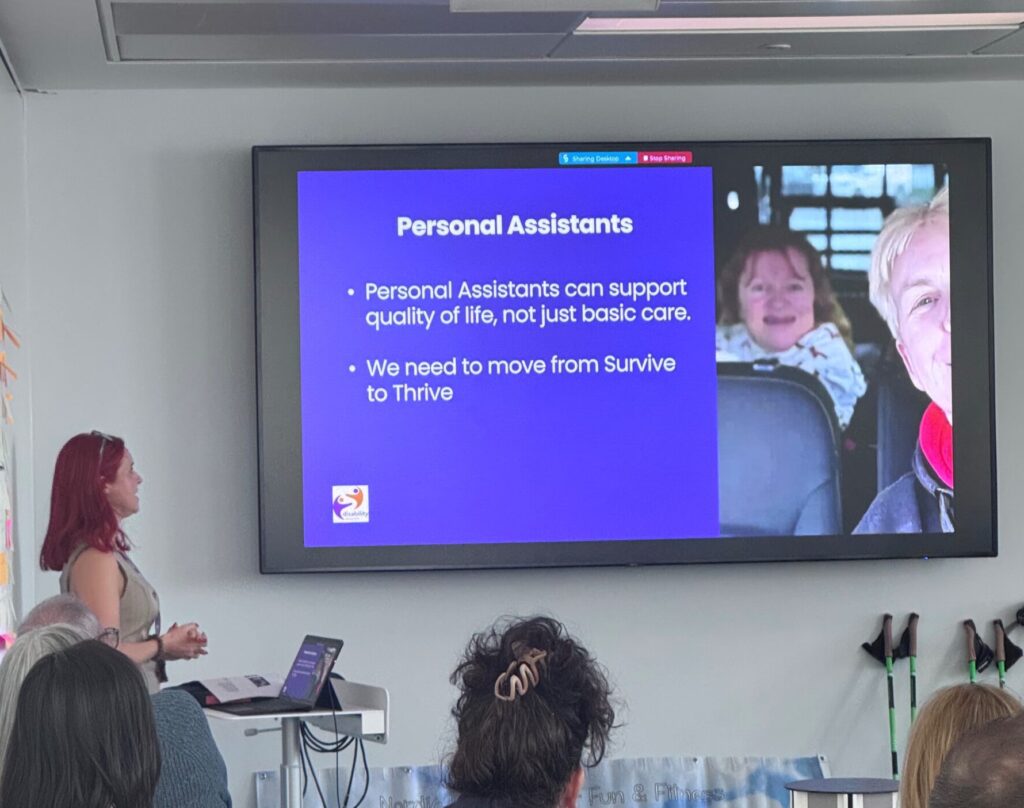
Recently, I delivered a session about personalisation, direct payments, and the importance of making sure support helps people live a good life, not just get through the day.
The session was really about people and what happens when someone’s world slowly starts to shrink.
I shared the story of Clive.
Before needing support, Clive was a husband, dad, grandad, gardener, darts player, RAF veteran and someone who loved “the crack down the club”. Like all of us, his life was full of routines, relationships, hobbies and the things that made him who he was.
But when his health changed, the conversations around him started to change too.
Suddenly, everything became about assessments, care calls, mobility, medication and risk. The labels started to become louder than the person.
One thing Clive said has always stayed with me:
“I miss the crack down the club. I miss the allotment. I miss it all.”
That really gets to the heart of why personalisation matters.
People do not just lose mobility or independence. Sometimes they lose connection, confidence, routine, purpose and the things that bring joy to everyday life.
Too often, support becomes focused on tasks:
- Was medication taken?
- Was the meal prepared?
- Was personal care completed?
Of course those things matter, but they are not the whole picture.
A good life is also about:
- Seeing friends
- Going out for coffee
- Getting to the football
- Joining community groups
- Keeping hobbies going
- Feeling part of something
During the session, we talked about how direct payments and personal assistants can help people keep hold of those things. When they work well, they give people more choice, more flexibility and more control over their own lives.
We also explored the role of community support and local micro-enterprises. Some of the most creative and meaningful support happens at neighbourhood level, where people know each other, relationships matter, and support can flex around real lives instead of fitting people into rigid systems.
One of the things I said during the session was that traditional support can sometimes feel like a ready meal: fixed, limited and the same for everyone.
Personalised support should feel more like a restaurant menu:
choice, flexibility and something built around the person.
The biggest message from the session was simple really:
care and support should wrap around someone’s life, not the other way around.
As services face increasing pressure, it is more important than ever that we do not lose sight of the person behind the paperwork, the assessment or the care plan.
Because everybody deserves more than just getting by.
They deserve connection, belonging, choice and the chance to continue living a life that feels like theirs.